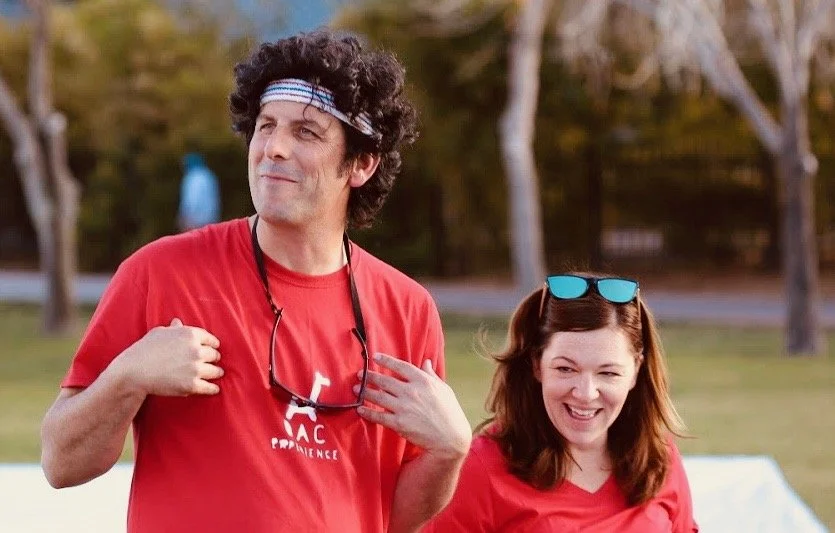
Meet Duane


Duane Freeman
LPC, MEd
I am a Licensed Associate Counselor who specializes in supporting adolescents, young adults, and adults.
I support my clients with short- and long-term models, and help them in working through anxiety, ADHD, bereavement, divorce, self-harm, family dynamics, social coaching, OCD, school refusal, drug use, adoption, depression, parent/child communication. My training is rooted in person-centered therapy and my sessions focus on cceptance and commitment therapy, cognitive behavioral therapy, and solution focused brief therapy.
My experience spans more than 20 years, working predominantly in independent private schools, meeting with individuals, developing and implementing social emotional learning curriculum, collaborating with various other psychologists and psychiatrists to support students, creating parent presentations on child development, social dynamics, parent-child communication, and running leadership, social, and divorce groups. I have a Bachelor's Degree from Columbia College (2000) and a Master’s Degree in Human Services and Counseling from DePaul University (2008).
I use humor and improv to lower defenses, teach social cues, practice interpersonal skills, and approach difficult topics in a playful, yet direct way. I have directed various summer camps, led faculty training, facilitated diversity and leadership retreats, and run innumerous community events. I have a team building and community connection business called “Olympics of the Absurd” which collaborates with nonprofit organizations, schools, and corporations on building and maintaining a positive and inclusive community culture. I truly believe that people are inherently good and want to strive to be better. I work closely with families to discuss the family unit and help them form parent-child teams and set behavioral routines that can support the well-being of their children. During our therapy sessions, I help my clients build self-awareness, formulate a self-care routine, develop social literacy, practice mental flexibility. Over time, I have built strong bonds with my clients and their family’s, and I am very fortunate to be a valuable part of their lives, growth, and development.
Currently, I offer one-to-one individual counseling for adolescents and young adults and look forward to meeting them and their family.

Recent Interview
By Voyage LA
Thanks for sharing that. Would love to go back in time and hear about how your past might have impacted who you are today. What breaks the bonds between people—and what restores them?
Bonds between people often break in subtle ways. It’s not always one major betrayal, but the accumulation of little fractures: breached trust, political or social divides, miscommunication amplified by social media, and the distortions our minds create when we feel insecure, unseen, or insignificant. We project fears onto others, assume motives that aren’t there, or escalate scenarios in ways that don’t match reality.
Technology intensifies this because so much of it happens behind screens. When we can’t see each other’s eyes, hear tone of voice, or feel the warmth of being physically present, the humanness that softens conflict often gets lost.
What Restores Bonds
Restoration, however, is always possible—and it’s often where the deepest connection is forged. Close relationships rarely stay smooth. They move up and down, back and forth, through rupture and repair. What makes them lasting is not the absence of hurt, but the presence of healing together.
At the center of restoration are a few practices:
Accountability – Not punishment, but the willingness to own what’s ours, admit imperfection, and lean into honesty.
Vulnerability – The courage to show up flawed and still worthy of love and belonging.
Communication – Returning to each other with words, tone, and presence that invite repair instead of widening the rift.
This is not simply about apology—it’s about accountability that leads to vulnerability, which leads to true connection.
As Brené Brown puts it, “vulnerability is the birthplace of connection.” When we allow ourselves to be fully human—with all our messiness—we invite others to do the same. That shared humanness is what mends what was broken.
Contact Info:
We recently had the chance to connect with Duane Freeman and have shared our conversation below.
Duane , really appreciate you sharing your stories and insights with us. The world would have so much more understanding and empathy if we all were a bit more open about our stories and how they have helped shaped our journey and worldview. Let’s jump in with a fun one: Are you walking a path—or wandering?
Am I walking a path or wandering? Honestly…. Both. I like to think I’m always on a path and setting goals — it’s just that life tends to have a fun sense of humor and loves to rearrange the trail markers when I’m not looking. I’ve learned not to fight it too hard; every detour usually turns into something interesting and I have to remind myself that it’s the journey, not the destination. Although it would be fun to try arriving at the place I set out for one of these days. Sounds overrated. I’ve stopped believing there’s a single ‘right’ path and started embracing the improv rule: there are no mistakes, only happy accidents. So maybe I’m not lost — I’m just saying ‘yes when I get invited to another party along the way. It’s made for a fun experience but sometimes some weird parties.
Can you briefly introduce yourself and share what makes you or your brand unique?
Hi, my name is Duane Freeman, and I’m a Licensed Professional Counselor. I created Creative Counseling because I believe therapy should be as unique as the people who walk through the door. My approach is deeply relational—I see myself not as someone who prescribes a “one-size-fits-all” method, but as a partner who walks alongside you in the work.
I draw from my background in improv and comedy to bring humor, playfulness, and flexibility into sessions. That kind of creative energy helps people relax, see things from new angles, and discover solutions in ways that often feel lighter and more natural. I like to explore what actually works for each individual—whether that means building new tools, experimenting with experiential strategies, or incorporating play and collaboration.
Part of why I approach therapy this way comes from my own journey. I started in Chicago, performing at Second City while also working in schools. Later, I became a middle school counselor, balancing auditions by day and comedy by night. After starting a family, I moved to Phoenix and worked at PCDS, and eventually built Creative Counseling out of a mix of all those experiences. Along the way, I’ve also leaned into my passion for team building and board games—using collaboration, creativity, and play as vehicles for growth and connection.
At its heart, Creative Counseling is about being present, adaptable, and willing to find the path that fits you—not forcing you into a mold. My goal is to make therapy both meaningful and engaging, where the work feels possible, collaborative, and even playful.
What did suffering teach you that success never could?
The Power of Vulnerability
For a long time, I thought pain was something to hide. But when I stopped concealing it and began to use it as power, I discovered the gift of vulnerability. I realized that what often feels like low status—those moments when we’re powerless, insecure, or uncertain—can actually become the bridge to genuine connection.
I saw this first in improv scenes, where leaning into “low status” characters creates empathy and relatability. But I’ve also seen it in real life and in therapy. Recently, I encouraged a client to share a piece of their struggle with just a few people they trusted. As soon as they opened up, they were surprised to hear stories echoing their own—others who had struggled in similar ways, others who were still figuring things out. That moment transformed their perspective: pain wasn’t isolating them, it was connecting them.
That’s been my experience too. What has connected me most deeply to people has not been my polished successes, but my humanness—my flaws, my ongoing work, my willingness to admit that I don’t have it all figured out. My superpower has become the ability to accept myself as I am, while still staying committed to growth.
To me, failure is not a sign of weakness but proof that I’m trying—that I’m stepping out, risking, putting myself in motion. The journey is the goal. The beauty of this work, both personally and professionally, is witnessing what happens when people meet each other in that raw, unguarded place.
Because at our core, most humans are good. Most of us want to connect, to make better choices, to grow. Vulnerability just gives us permission to get there—together.
Alright, so if you are open to it, let’s explore some philosophical questions that touch on your values and worldview. Whose ideas do you rely on most that aren’t your own?
Honestly, I don’t even know if any of my ideas are my own. I’m basically a collage of other people’s insight and wisdom — a walking Pinterest board of psychology, dropping in and out of podcasts, and a Youtube compilation to keep with pop culture and the quick quotes I always seem to forget. I’m reading books, listening to podcasts, bingeing shows, watching movies, having conversations, and trying to make sense of the weird and wonderful thing we call “being human.”
So the ideas I rely on most? Everyone’s. All of them. The barista’s insight about patience, the client’s accidental wisdom mid-session, a random TikTok on emotional regulation — they all count in my book. I think my job is less about inventing ideas and more about remixing them into something that feels approachable, playful, and sounds real.
At the end of the day, I’m just trying to create spaces where people can explore their stuff without judgment — to see themselves differently, laugh a little, and stay curious.
Okay, so before we go, let’s tackle one more area. When do you feel most at peace?
I think I feel most at peace afterwards—after working with a client for a long time and seeing the choices they make, the shifts that happen, the subtle but life-altering growth that no one will ever see or praise. There’s a quietness to it—knowing that something profound has changed, that a person’s relationships will be softer, their world a little kinder, and that those ripples will move through their community in ways no one can trace back to therapy.
That kind of peace isn’t loud or celebrated; it’s internal. It’s watching someone move from chaos to calm, from self-doubt to self-acceptance, and feeling that shared exhale. That’s the kind of peace that reminds me why I do this work.
And then there’s the more tangible kind—the peace I feel when I’m watching that bowing monk on Camelback Mountain, a quiet reminder of acceptance. Acceptance of what I can’t control, of the impermanence of things, of life itself. Both forms of peace—the professional and the personal—feel intertwined to me. One happens in the therapy room, the other in the wide, still desert. Both are about letting go, and in that letting go, finding calm.